Tokyo’s police has one. Osaka’s metro has one. Even Japan’s Nuclear Waste Management Organization has one.
What are we talking about?
Mascots.
In Japan, government agencies, cities, regions and railway companies have cute mascots representing their mission.
Why? To make them more approachable. More memorable. More interesting.
In Tokyo, Pipo-kun, the yellow large eared mascot of the police department promotes public safety.
Gumo, a cute mole character, represents Japan’s Nuclear Waste Management Organization. What better choice to characterize underground disposal of radioactive waste!
In Nikko, a middle-aged superhero promotes the city’s attractions, including its historic sites, hot springs, and local foods.
Across the country, giant cartoon bears greet tourists. Smiling characters offer helpful services and safety reminders. Quirky creatures represent towns you’ve probably never heard of.
In Japan, mascots aren’t just for children or sporting events. They’re everywhere.
Often, they are beloved public personalities. And in many ways, they are a cultural phenomenon.
But why are they so popular?
A big part is kawaii, Japan’s culture of cuteness.
For government departments, police and other public institutions, mascots help make public services friendlier. They are perfect for awareness campaigns, road safety or crime prevention.
For regions and cities, mascots help attract tourists, sell regional merchandise, and create local identity.
Mascot are more easily remembered than a company logo. It’ good for business and brand recognition. Think plush toys, keychains, stationery or food products.
And mascots do way better on social media than corporate personalities, right?
I have seen so many of them during my stay in Japan that, whenever I think of specific products, cities, or places, a whole set of cute characters starts hopping around in my mind.
The best part is that you can also meet mascots in person. At festivals, shopping centers, sporting events, and community celebrations. Visitors can take photographs and interact with them. Much more memorable than a simple ad.
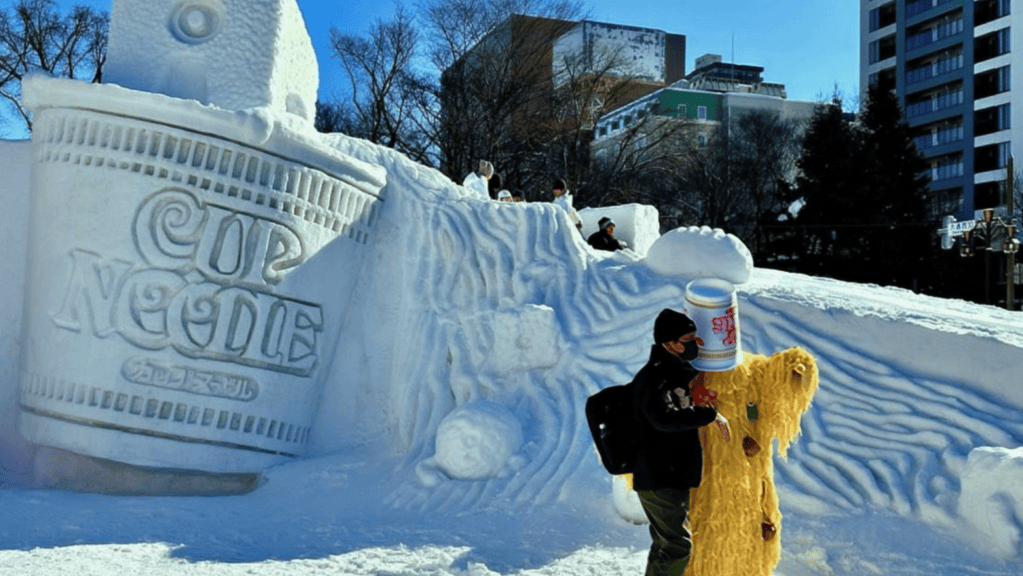
At the famous Sapporo Snow Festival, I even saw the mascot of a noodle soup company walk around posing for photos in front of of a giant snow sculpture of a noodle pot.
Smart marketing? Definitely.
But I’d rather see a cute cat-like character on an Osaka subway poster reminding me to be polite than a sign in large letters shouting at me what not to do.
Did you know:
- Japan has its own mascot popularity contest. Yuruverse is a nationwide competition where hundreds of regional mascots compete for public votes at an event in Tokyo.
- Kumamon, a cheeky black bear is a government employee in Kumamoto Prefecture. He has the official titles of sales manager and happiness manager. He even has his own office, where visitors can meet him at times.
- Some mascots are not professionally designed. They can start as simple, rather amateur-looking creations by local people. That’s part of their charm.
Also read: Got gatcha gatcha?
NEW: Follow us on Instagram: @Japan_nuggets
More Japan Nuggets: https://japannuggets.com/


Leave a Reply