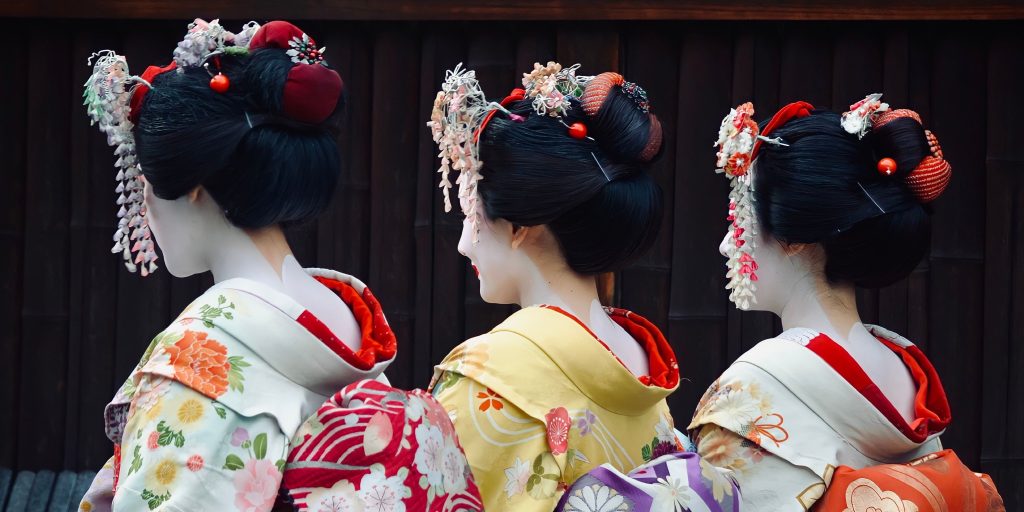
When you picture traditional Japan, geisha are probably among the first images that come to mind.
Yet you are unlikely to run into one on the street. In fact, among my Japanese colleagues and friends, only one had ever seen a geisha in person.
Their numbers have declined significantly over the past century. Today, only a few thousand geisha are left, compared with tens of thousands before World War II. Kyoto is still the cultural heart of the tradition.
But what do geisha actually do?
In short, they are highly trained entertainers and artists who preserve traditional Japanese culture. And no, they are not involved in sex work. Modern geisha typically perform at private banquets, cultural events, high-end restaurants, seasonal festivals and sometimes tourism-related performances.
When I saw geisha for the first time at a recent event, I was mesmerized by their elegant appearance, incredibly delicate makeup and musical talent. Their movements were so graceful that they seemed to glide above the floor.
Becoming a geisha is a serious commitment. Think five to ten years of intense training – even today. Traditionally, a young woman would move into a geisha house (okiya) where she lives, learns, and is mentored and trained under a senior geisha.
Training includes classical dance, music, singing, tea ceremony, conversation, etiquette and traditional dress and makeup. Historically, and in many places even today, geisha training is a full-time job.
These days, things are a bit more flexible, though. Some places allow geisha trainees to study at university or work part-time. But it’s still a demanding profession with late-night performances, strict schedules, and evening banquets running late. Not to mention the strong expectations around presentation and reputation.
While being a geisha isn’t a high-income career, established geisha can earn a comfortable living and enjoy a stable career. But it takes time. Apprentices usually don’t keep most of their earnings, since the geisha house covers living costs, training and expensive kimono.
Seeing geisha perform doesn’t come cheap. A private evening with geisha can cost anywhere from a few hundred to several thousand US dollars, although much of that goes toward the venue, hospitality, and overall experience rather than directly to the performers. More casual cultural performances for tourists are usually much more affordable.
So, if you ever encounter a geisha, consider yourself lucky. Across Japan, geisha are generally respected and admired as cultural figures, but they are also seen as part of a traditional world that most people don’t encounter in everyday life.
Did you know:
- Most Japanese people never meet a geisha in person because appearances are usually private, expensive, and by invitation.
- One common misconception is that anyone wearing a kimono is a geisha. In reality, kimono are traditional Japanese garments that many people still wear for weddings, festivals, and other special occasions.
- If you happen to be in Tokyo in May, you could see a real geisha at Azuma Odori, a famous annual geisha festival in Tokyo. That’s where I had my first and only encounter.
Read more Japan Nuggets: https://japannuggets.com/


Leave a Reply