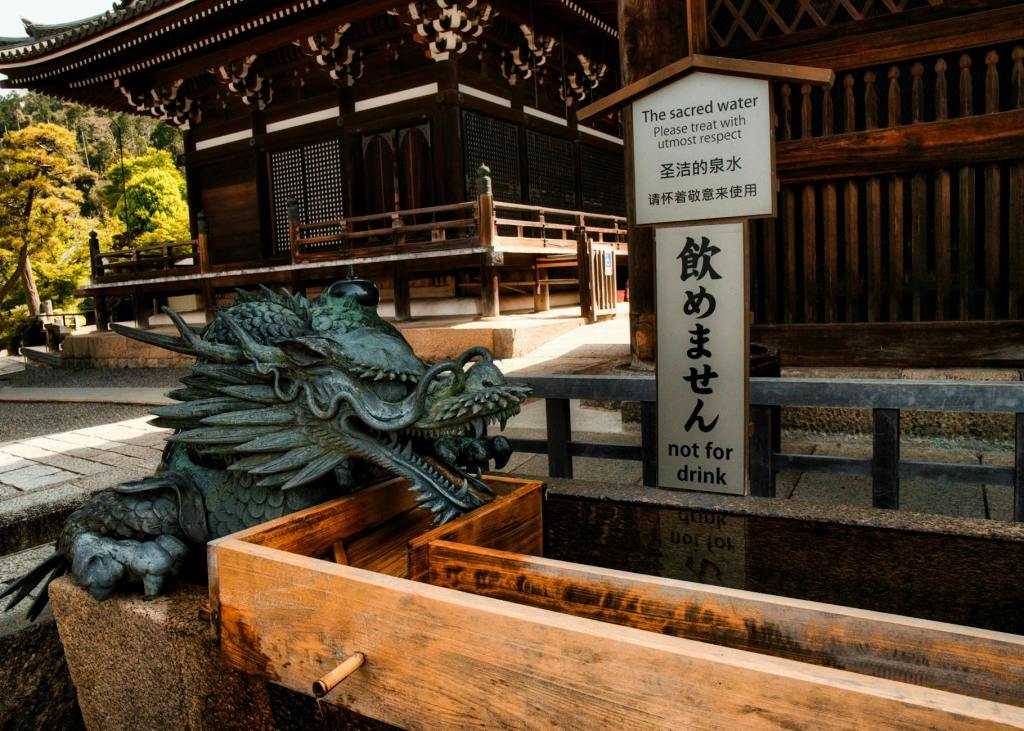
What are dragons to you?
Are they fire-spitting monsters, to be feared and avoided?
In my children’s books, they were violent, dangerous villains burning villages and castles. From medieval legends to modern fantasy, in much of Western culture the dragon represents chaos. A threat that must be defeated.
Come to Japan and you’ll get a different story.
Here, dragons are not symbols of destruction but of wisdom and good luck.
Importantly, they don’t breathe fire – they control rain, rivers, floods and storms. No wonder they were so respected in rural communities, where good rainfall meant a good harvest.
In Japanese tradition, dragons (ryū) represent power, prosperity and the forces of nature. They can appear as gods or spirits and are closely connected to the sea. For example, Ryūjin is a dragon sea god who controls the tides.
All over Japan, you’ll see dragon sculptures on the roofs and walls of palaces and temples to protect against fires – a constant threat in past centuries and one of the main reasons why so few original buildings survived.
Eastern dragons also look different from their Western counterparts. They have long, snake-like bodies, whiskers and claws – and no wings. They kind of fly magically.
And they are mostly colorful, often gold, red or green – giving them a majestic look.
In the West, dragons embody chaos and danger that must be defeated. In Japan, they represent natural power – something to respect, align with, and live in balance with.
So, in a way, dragons reflect how cultures understand the world itself:
Is nature something to conquer?
Or something to be in harmony with?
The answer shapes the dragon.
Did you know?
- Some Japanese dragons can shift into human form, often appearing as beautiful women or wise old men in folklore.
- Japanese dragons typically have three claws, Korean dragons have four, and Chinese dragons have five.
- Video games like Pokémon and Monster Hunter feature dragons influenced by Japanese mythology and folklore, often connected to storms and spirits.
Read more Japan Nuggets: https://japannuggets.com/


Leave a Reply