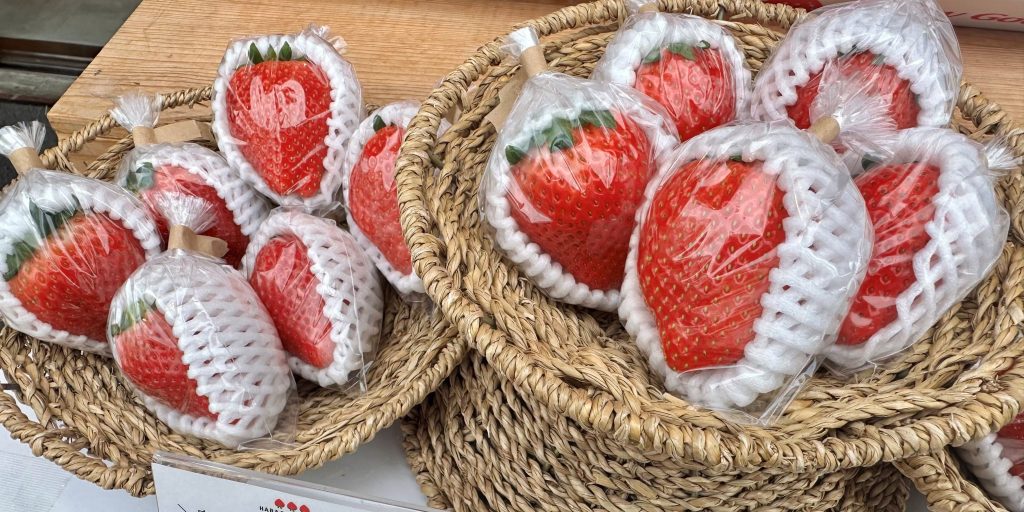
Shop in any Japanese supermarket and you’ll quickly notice it: three carrots wrapped in plastic, two bananas packaged together, individual peaches protected with foam netting and plastic. At first glance, it can seem excessive.
At train stations you find single apples in small plastic bags for the ride. Even bakeries wrap croissants or buns one by one.
Yes, there’s also plastic packaging in the United States and Europe, but why is it so common in Japan, even for individual items?
A big factor is freshness and quality. Japanese customers value high-quality food and plastic is used to keep produce, baked goods and other items looking perfect and fresh.
Even small imperfections can affect whether something sells, so presentation isn’t just aesthetic – it’s practical and important for business.
Packaging itself is often seen as a mark of quality.
A well-wrapped item signals attention to detail and respect for the person buying or receiving it. This is especially important in Japan’s gift-giving culture, where presentation is part of the experience, not just an extra.
Convenience plays a role too. In dense urban areas, many people shop frequently and in small quantities.
Individually wrapped portions are easier to carry, store, and consume on the go. They also suit Japan’s many single-person households and smaller living spaces, helping people buy only what they need and reduce food waste.
Hygiene is another factor. Japan has long had high standards around cleanliness in food handling. Packaging reassures customers that items haven’t been touched by other shoppers.
At the same time, the environmental impact of all this packaging is an ongoing conversation. Japan has a highly organized waste-sorting system, but a significant amount of plastic waste is ultimately incinerated rather than recycled.
Debates about sustainability and waste reduction are ongoing.
The individually wrapped apples, bananas or even strawberries still make me smile, though. In Japan fruit is often treated as a luxury item or gift – and can be extraordinarily expensive.
So, while all that wrapping might look unnecessary at first glance, it reflects a mix of care, presentation, freshness, and respect for the customer, even as concerns about waste continue to grow.
Did you know?
- Premium melons in Japan can cost over $50—and are often cushioned and wrapped like luxury goods.
- Some cookie brands design their individual wrappers as part of the experience, with colorful prints or hidden messages.
- In upscale restaurants, a single, perfectly prepared piece of fruit may be served as dessert – reflecting its status as something refined and prized.
Read more Japan Nuggets: https://japannuggets.com/


Leave a Reply