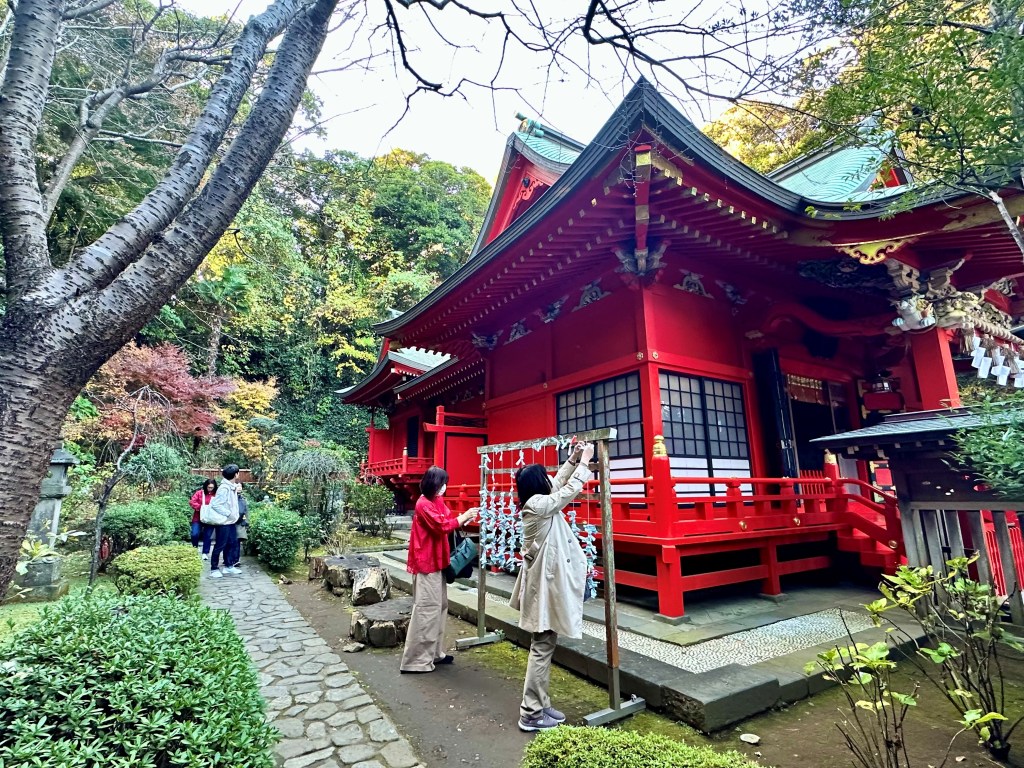
Walk through Tokyo and you’ll see temples and shrines everywhere. Large shrines on main streets and small neighborhood temples, hidden in side streets. Some look lost among ultra-modern skyscrapers.
You may wonder: how do they survive?
And then you notice it. Someone pauses, tosses a coin, claps their hands twice, makes a quiet wish or says a short prayer, bows—and moves on. Quick. Almost unnoticeable.
Most Japanese are not religious in a doctrinal sense. In fact, more than 70% say they have no faith. And yet, religion is part of everyday life.
People visit Shinto shrines at New Year’s (hatsumode). Newborns are taken for blessings. Children celebrate Shichi-Go-San at age 3, 5 and 7 to thank for healthy growth.
Weddings? The choice is Western style – white dresses, romance and elegance beat strict Shinto weddings. They are also heavily marketed by magazines and bridal chains!
Funerals? Buddhist. That’s how deceased and ancestors are traditionally honored.
It clicked for me when I heard the phrase: Born Shinto, married Christian, buried Buddhist. What a wonderful way to happily mix whatever works best!
Religion and superstition also go hand in hand. Shrines and temples sell countless charms (omamori) for protection from bad luck, for happy love, good health, safe travels or successful exams. These charms are replaced yearly – just in case.
I had to laugh when I first visited a shrine drawing a paper fortune (omikuji) which is to predict luck and give advice.
After shaking a box and paying 200 yen, I read my fortune and didn’t like it at all. I was promptly invited to tie it to a rack at the shrine, symbolically leaving the bad luck behind.
Later, the shrine burns these unwanted fortunes. Buddhist temples do the same.
So, it’s like a small, ongoing conversation with luck and destiny. With the potential to negotiate.
Religion in Japan seems like a mix of tradition, superstition and hope. Life is navigated carefully, thoughtfully – and just in case.
Did you know?
- Tokyo is estimated to have more than 2,800 Buddhist temples, and well over 1,000 Shinto shrines.
- Some shrines now sell digital omamori charms for smartphones and even offer online blessings—tradition adapting to modern life.
- Many Japanese families have both a Shinto altar (kamidana) and a Buddhist altar (butsudan) in their homes, reflecting the everyday blending of the two traditions.
Read more Japan Nuggets: https://japannuggets.com/


Leave a comment