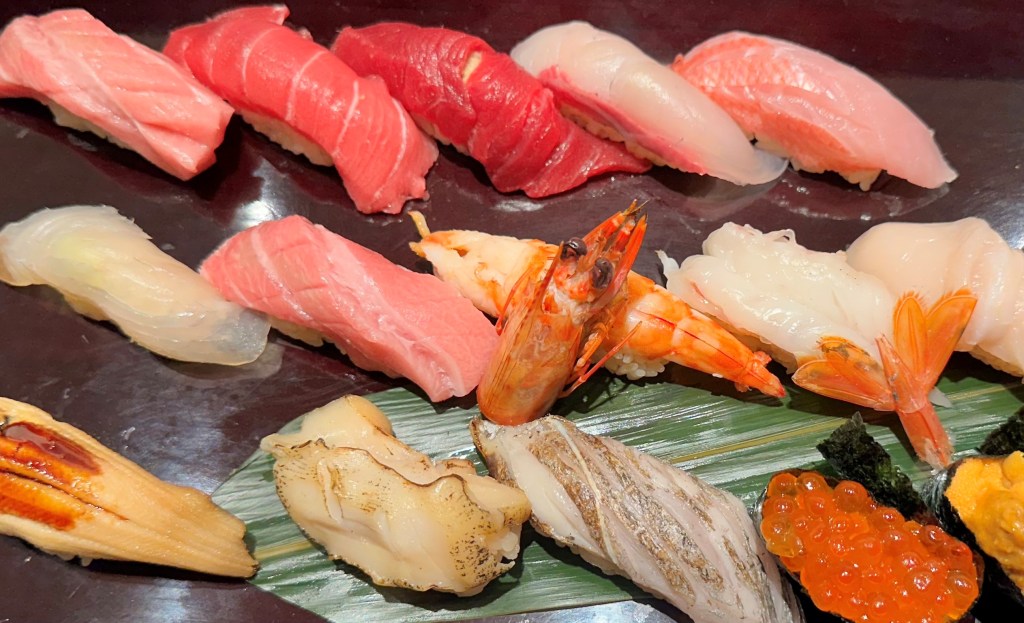
I say Japan, you say sushi, right?
For many people in the United States and Europe, sushi is the food they confidently associate with Japan. Things get a little trickier with ramen, bento—or kimchi. Could you tell which is actually Japanese and which is not?
While sushi is loved all over the world, it might surprise you that it’s not an everyday food in Japan—and it’s rarely made at home. It’s a food of national pride and more of an art form than a quick meal.
Traditionally, sushi chefs trained for 5–7 years in live-in apprenticeships called uchi-deshi, learning entirely by observation and repetition. No written recipes.
While uchi-deshi still exists in some traditional, often high-end sushi restaurants in Japan, most sushi chefs today go through 2-3 years of training.
They are highly respected, and for good reason: you’re literally trusting them with raw fish. Few dining experiences are more mesmerizing than sitting at a bar watching a sushi chef work—smooth, precise movements, total focus, and knives sharp enough to make you sit up a little straighter.
And here’s a final piece of sushi wisdom I love: A Japanese colleague once told me that eating sushi is almost like a ceremony. While you eat a piece, you listen. When your dining partner eats, you talk.
That way, the conversation stays perfectly balanced—just like the sushi.
So next time you eat sushi, keep a few etiquette tips in mind:
- Don’t cut or break the sushi apart. It’s meant to be eaten in one bite. Yes, even the big ones.
- Don’t mix wasabi into your soy sauce. The chef already balanced the flavors for you—trust them.
- Don’t dunk it in soy sauce. A light dip (if any) is enough. Sushi is about appreciating the fish and its subtle flavors, not drowning it.
- Always follow the chef’s recommendations. He (and yes they are mostly men) knows best what’s fresh.


Leave a comment